
Top omakase restaurants in Hanoi 2026: 7 stalls to try and how to choose
A roundup of the 7 most‑mentioned omakase stalls in Hanoi, from tiny sushi bars to Michelin‑starred restaurants: style, area, who it suits, and reservation tips.
In recent years omakase is no longer rare in Hanoi. The city now has tiny sushi counters, chef‑run kappou stalls, hotel teppanyaki, and affordable options for beginners. This article lists the most‑cited venues and how to pick the right one for your meal.
Restaurant info is taken from press and public reviews. Prices, hours and menus may change, so call or check the official site before visiting. Prices are omitted because sources vary widely.
What types of omakase exist in Hanoi
Before picking a place, know what kind of meal you want:
- Sushi omakase: focus on sashimi and nigiri, the itamae prepares each piece in front of you.
- Kappou: chef cooks at the counter; besides sushi there are stews, grilled and fried dishes in a kaiseki‑like sequence.
- Teppanyaki omakase: main dishes grilled on an iron plate before you, often featuring wagyu and seafood.
- Wagyu‑focused stall: meat is the star; raw fish is only a side.
7 most‑mentioned omakase stalls
Hibana by Koki — Hoàn Kiếm
Located in Capella Hanoi hotel on Lê Phụng Hiểu Street. This is a teppanyaki‑style omakase stall awarded one Michelin star. Prices are at the top of this list, suited for very special occasions or important guests.
Kappou stall of Chef Takahiro Ishida — Tây Hồ
On Nguyễn Đình Thi Street near West Lake, reviews call it Kappou Ishida or Kappou Hanoi. Chef Takahiro Ishida holds a rare certification for processing garoupa and is also a sake sommelier. The menu follows kaiseki, ideal for diners who want cooked dishes as well as sushi.
Nuboko Sushi & Teppanyaki — Hoàn Kiếm
2nd floor, Hong Ha Building, 37 Ngô Quyền. Menu blends sushi with teppan‑grilled dishes, offering both raw and cooked items. Reviews note the place is often fully booked on weekends.
Sushi Uminohana — Hoàn Kiếm
Long‑standing sushi counter on Phan Kế Bính Street, praised for fish freshness. Small space with about ten seats facing the kitchen; reservations are recommended.
Yuzu Omakase — Hai Bà Trưng
No. 17 Thái Phiên, Hanoi branch of a brand from Ho Chi Minh City. Performance‑focused, emphasizes plating and uses fish‑marinating techniques. Few seats, offers lunch and dinner sets. Some sources note prices exclude VAT and service fee; confirm when booking.
Ushino Kura — Ba Đình
On Vạn Bảo Street. This is a wagyu‑focused restaurant styled more like kaiseki than a sushi bar, ideal for diners centered on Japanese beef.
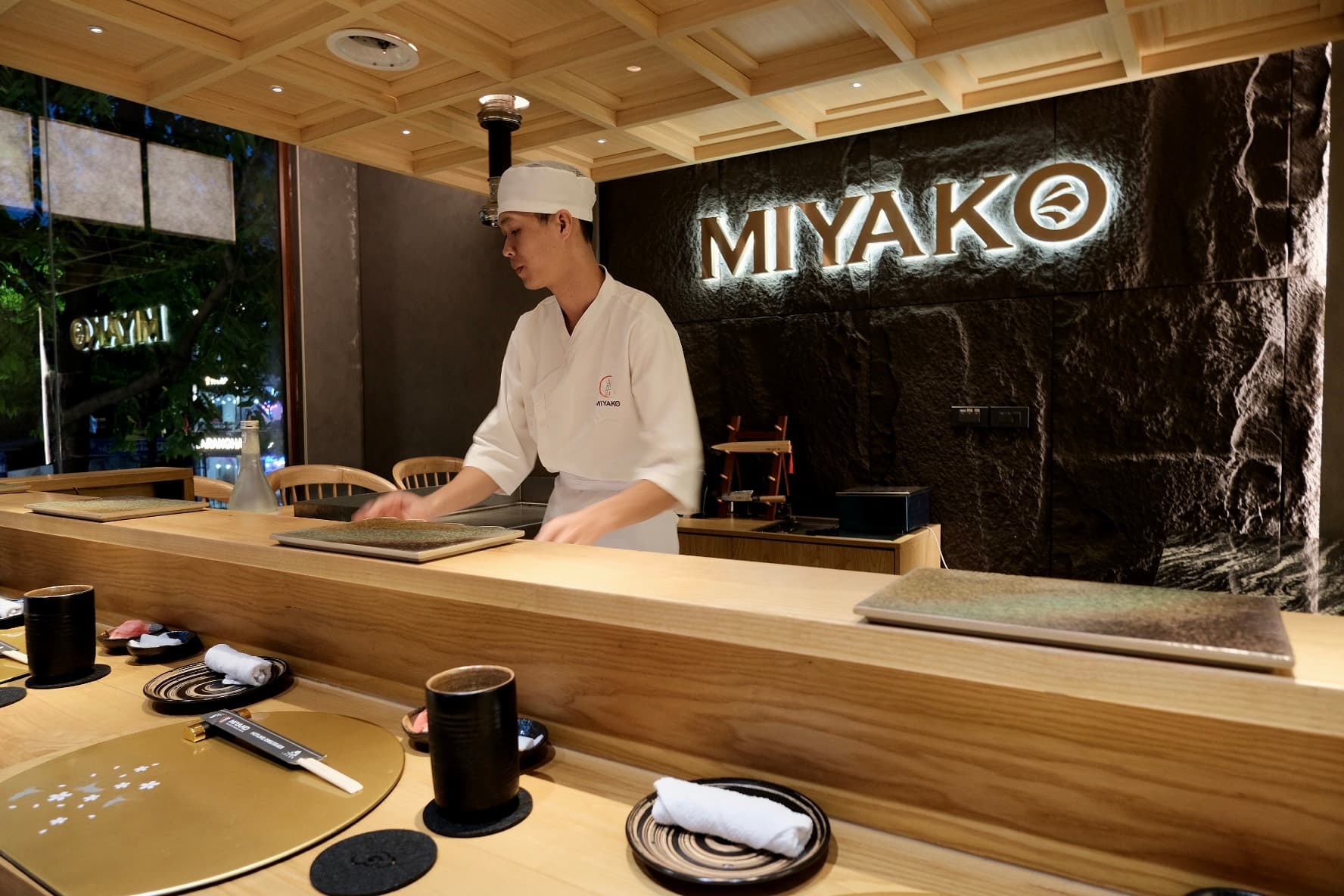
Miyako — Ba Đình
12‑seat omakase counter at 28 Đào Tấn. Three daily seatings: 12:00, 18:30, 20:30; all start at the same time. Three sets to choose according to budget:
- KIKU 菊 — 1,000,000₫
- TSUKI 月 — 2,000,000₫, includes sake and nine nigiri
- MIYABI 雅 — 3,000,000₫, includes kinmedai, baigai and two Wagyu A5 preparations
Price per guest, VAT not included. Availability shown on the website; reservations can be made online.
Quick comparison
- Hibana by Koki (Hoàn Kiếm): teppanyaki omakase, 1 Michelin star
- Kappou Takahiro Ishida (Tây Hồ): kappou, kaiseki
- Nuboko (Hoàn Kiếm): sushi with teppanyaki
- Sushi Uminohana (Hoàn Kiếm): sushi omakase
- Yuzu Omakase (Hai Bà Trưng): sushi omakase, performance style
- Ushino Kura (Ba Đình): wagyu, kaiseki
- Miyako (Ba Đình): sushi omakase, 3 sets, 3 seatings daily
How to choose a stall
- Budget: omakase prices in Hanoi range from a few hundred thousand to several million VND per guest. Ask whether VAT and service fees are included.
- What you want to eat: choose sushi omakase for raw fish, kappou for cooked dishes, or teppanyaki/wagyu‑only for beef lovers.
- Seat count: fewer seats mean the itamae can spend more time per guest, but reservations are harder.
- Fixed seating vs. open time: fixed seatings require punctual arrival; the advantage is synchronized service for the whole group.
- First‑time omakase: pick a moderately priced set with core flavors, then upgrade next visit. See 9 things to know for your first omakase.
Frequently asked questions
How much does omakase cost in Hanoi? It varies by venue—from a few hundred thousand VND at casual stalls to several million per guest at high‑end restaurants, not including drinks. Miyako’s three sets cost 1, 2 and 3 million VND per guest, VAT excluded.
Do I need to reserve? Almost always, because omakase counters have few seats. On weekends book several days ahead.
Can I go alone? Yes. The counter style is ideal for solo diners who can interact directly with the itamae.
What if I’m allergic to seafood? Notify the restaurant when you book so the kitchen can adjust the menu. Don’t wait until you’re seated.
Reserve at Miyako
Check seat availability for each session at the reservation page. A 200,000₫ deposit per guest holds the spot; returning Miyako guests are exempt. The three sets are listed on the Omakase page, and if you’re unsure which to pick, read the KIKU vs. TSUKI vs. MIYABI comparison.